Lessons for the Future
9 November 2025
The story of Signa Group is one that will be studied in business schools and boardrooms for years to come. What started as a tale of ambition and vision quickly turned into a warning about what happens when ethics and responsibility fail to keep up with growth. After four posts examining its rise, structure, ethical dilemmas, and the human cost of its downfall, this final entry looks ahead to what companies, leaders, and future entrepreneurs can learn from the fall of one of Europe’s most influential real estate empires.
Rebuilding Trust in Business
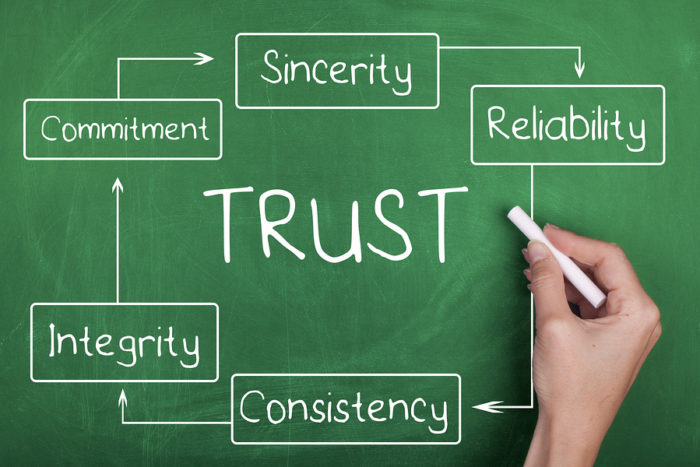
Trust is the foundation on which every successful organization is built. It connects leaders with employees, investors with companies, and brands with the public. Once that trust is broken, rebuilding it can take years or even decades. The collapse of Signa shows how fragile trust becomes when honesty and openness are replaced with silence and half-truths. Investors were left uncertain, employees received little information, and the public was misled by an image of stability that no longer reflected reality (Bloomberg, 2024). When transparency fades and accountability weakens, even the strongest company begins to fall apart.
The image above captures what true trust is built on: sincerity, reliability, consistency, commitment, and integrity. Each of these values is essential for creating a company culture people can believe in. Sincerity ensures that communication is honest, reliability means promises are kept, consistency builds predictability, commitment shows dedication, and integrity ties everything together. When one of these values is missing, the entire foundation becomes unstable. Signa’s downfall demonstrates how ignoring these principles leads to confusion, disappointment, and eventually collapse. The most important lesson from this is the value of consistent transparency. Companies need to communicate both their successes and their challenges. Financial or operational risks should be discussed openly with stakeholders because hiding problems never solves them, it only delays the consequences. Being transparent may feel risky in the short term, but in the long run it strengthens credibility, builds trust, and creates a more resilient organization. Real trust is not built on perfection but on honesty, accountability, and the courage to communicate openly through every situation.
Ethics as a Strategic Asset
For years, Signa focused on prestige, luxury, and architectural dominance, building its identity around grandeur and influence. Its projects became symbols of ambition and wealth, representing success in its most visible form. Yet beneath that polished image, the company lacked a solid ethical foundation strong enough to sustain such rapid growth. A company’s moral compass should never be treated as a marketing tool or a public relations strategy. It should serve as the foundation for every decision made, from daily operations to major investments. When ethics are treated as decoration instead of direction, even the most successful business model begins to crack from within. The case of Signa shows that ethics are not a soft or secondary aspect of business but one of its greatest strategic strengths. Companies that lead with integrity tend to build stronger relationships with employees, investors, and customers. Ethical leadership fosters trust, loyalty, and stability, all of which are critical for long-term success. Investors are increasingly drawn to businesses that operate responsibly, because they understand that ethical behavior reduces risk and strengthens reputation.
Leaders who prioritize integrity over short-term gains create organizations that are not only profitable but also respected. When ethical standards are deeply integrated into business practice, they stop being a limitation and become a source of competitive advantage. They encourage transparency, attract people who share the same values, and inspire confidence during both good and difficult times. The downfall of Signa serves as a reminder that true success depends not only on what a company builds, but on the values that hold it together.
Rethinking Leadership
René Benko’s leadership was often seen as bold, visionary, and full of confidence. He built his image around big ideas and impressive projects that captured public attention and made people believe in his vision. But charisma without accountability can quickly turn into arrogance, and that seems to be what happened here. When leaders start believing they are untouchable, they stop listening, stop learning, and eventually lose sight of the people who helped them rise in the first place. True leadership is not just about being the loudest or most confident voice in the room. It is about knowing when to slow down, when to ask for help, and when to admit that something is not working. Modern leaders face constant pressure to innovate, move fast, and always deliver results. But leadership is not just about chasing the next big milestone. It is also about humility, transparency, and emotional intelligence. A good leader must be able to balance ambition with awareness, to take bold risks while staying grounded in ethical values and empathy. This means creating an environment where people feel heard and respected, where mistakes are acknowledged rather than hidden, and where growth is built on trust rather than fear.
One of the clearest lessons from Signa’s downfall is that leadership is not only about achieving success but also about managing failure responsibly. Anyone can lead when things are going well. The real test comes when things start to fall apart. A true leader is defined not just by the company they build but by how they treat the people who build it with them. When ambition grows faster than accountability and profit matters more than people, collapse becomes almost inevitable. In the end, strong leadership is not measured by personal wealth or public recognition but by integrity, empathy, and the courage to take responsibility when things go wrong.
Preparing for the Unpredictable
Economic downturns, rising interest rates, and global challenges all contributed to Signa’s fall, but they were not the main cause. What truly destroyed the company was its lack of preparation for unpredictable circumstances. Signa’s heavy reliance on debt and complex ownership structures left it unable to adapt when market conditions changed. The lesson for future companies is to prioritise sustainability over scale. Growth is valuable only when it can withstand moments of crisis. Businesses must diversify investments, reduce dependence on borrowing, and maintain enough financial flexibility to protect their employees, partners, and investors from unnecessary harm. In this way, ethical business management also becomes risk management.
A Call for Ethical Awareness

At its core, the story of Signa shows that success without ethics never lasts. Big numbers and shiny buildings might look impressive, but they collapse fast when there is no honesty or responsibility behind them. For anyone in business, ethics should not be treated as something extra or theoretical. It is a mindset that helps people tell the difference between healthy ambition and pure greed. If Signa wants to recover, it should start by rebuilding trust. That means being open about what went wrong, improving communication, and setting up stronger leadership and governance. The company should bring in external audits, create a clear ethical code, and focus on how decisions affect everyone involved, not just investors. This approach follows the stakeholder theory, which says that companies have a duty to care for all the people and groups impacted by their actions. It leads to more sustainable growth because it keeps profit and people in balance instead of choosing one over the other.
Another path could be to take a more utilitarian view, focusing mainly on what benefits the largest number of people. That might mean restarting operations quickly or cutting costs to save jobs, but it could easily repeat old mistakes by ignoring deeper cultural and ethical issues. The stakeholder approach offers a stronger foundation because it looks beyond short-term results and focuses on fairness, respect, and trust. In the end, real success is not measured by assets or profits, but by the kind of character a company shows when things fall apart.
References
Bloomberg. (2024, February 10). How Europe’s property king lost his empire. https://www.bloomberg.com/news/articles/2024-02-10/rene-benko-s-collapse-of-signa-explained
Financial Times. (2024, January 12). The ripple effect of Signa’s collapse on European cities. https://www.ft.com/content/6dc0a87c-dcf0-4a61-9b8f-53b13b3b6b6b
Reuters. (2023, November 29). Austria’s Signa files for insolvency amid real estate turmoil. https://www.reuters.com/markets/deals/signa-files-insolvency-2023-11-29/
This is a very strong and an eye-opening conclusion of your series. You tied together the fundamental issues of ethics, leadership and responsibility to a beautiful effect. The fact that you have placed ethics in the framework of strategic asset instead of a moral obligation, is another piece of information that I loved in, particular because any person studying or doing business would find it as a powerful message. Your presentation of the topic of leadership, and particularly the contrast between charisma and accountability was also quite effective and well-worded. Your writing flows smoothly and has a reflective tone as it is suitable to the topic. The final paragraph is quite clear and striking in its own way, as it transforms the downfall of Signa into the lesson of the values and integrity rather than the failure in business. Overall, it is a very impressive, well-written, and inspiring post that makes an impression.
ReplyDeleteHi Nina,
DeleteThank you so much for your kind words. I’m really glad the message about ethics as a strategic asset stood out to you because I wanted to show that doing what is right can also be smart in business. I appreciate your comment on the balance between charisma and accountability since that contrast is at the heart of Signa’s story. My goal was to turn their downfall into a reminder that integrity and empathy always outlast profit, so I’m happy that came through.
Hi Lorena,
ReplyDeleteI agree with what Nina said in the previous comment. I also think this was a good conclusion to your blog series, especially when we think about ethics in general. I liked how you connected their financial and moral failure, as well as the identification of the reasoning behind these failures. I also like how you incorporated the stakeholder theory into the analysis. I think that provides the additional depth that this article needed. I think it would also be good to enrich your blog with things such as 'what alternative is most probable' or 'why wouldn't something work' to add more personal depth and understanding of the topic. Throughout the whole blog, your tone was both positively critical and analytical, which enriches this blog post even more.
Hi Vito,
DeleteThank you so much for your comment. I’m really glad you picked up on the connection between Signa’s financial and moral failure because that was something I wanted to make clear throughout the blog. I like your idea about adding more on possible alternatives or why some things might not work, that would definitely make it more personal and complete. I’m also happy you felt the tone was balanced since I wanted it to stay reflective but still a bit critical.
I really this is an excellent and thorough analysis of Signa Group’s rise and fall. I appreciate how you connected trust, ethics, and leadership to the company’s collapse, especially the emphasis on transparency and integrity as foundations for long-term success. I also liked your point that ethical leadership isn’t just about profit but about accountability, empathy, and resilience. The lessons you highlighted are practical and highly relevant for future business leaders.
ReplyDeleteDo you have any opinions on how could Signa have implemented ethical practices without slowing its growth?
Hi Megi,
DeleteI really liked your comment and how you connected ethics, trust, and leadership in Signa’s collapse. I think Signa could have maintained its growth by embedding transparency into its structure from the start, for example through clear reporting, external audits, and ethical guidelines that kept expansion aligned with accountability. Thank you for your response to the post!