Inside Signa Group: How a Tyrolean Start-up Became a European Property Powerhouse
9 November 2025
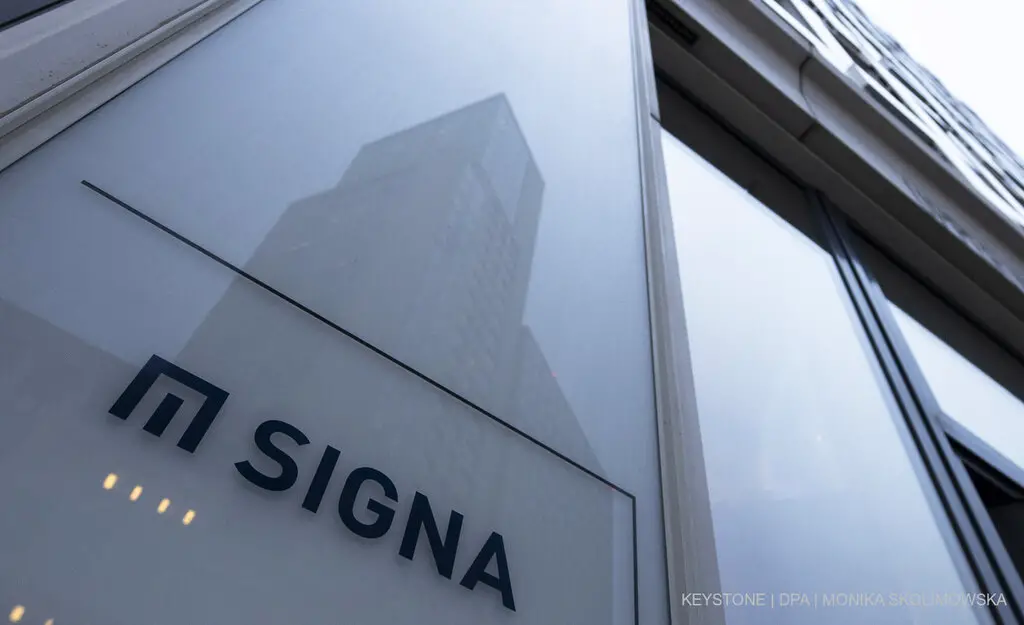
From the outside, Signa always looked like the ultimate European real-estate success story: glamorous assets, blue-chip partners and glossy architectural renders of city-centre landmarks. For my second post, I’m stepping away from the scandal and simply explaining what Signa actually is, how it grew, and how its empire was structured — the part that matters if you want to understand the company behind the headlines.
From Innsbruck beginnings to a continental portfolio
Signa traces its origins to founder René Benko, who started the business in the late 1990s in Innsbruck, Austria. A contemporary research report puts the founding year at 1999 under the name “Immofina Holding,” which later became Signa Holding (Green Street, 2023). The group then expanded from refurbishing properties in Austria to building a pan-European platform focused on prime, city-centre real estate, with offices in hubs such as Vienna, Munich, Berlin and Zurich.
What made Signa stand out was its willingness to buy or redevelop iconic buildings in absolute A-locations and then wrap them in ambitious retail or mixed-use concepts. Over time, the group sat in the middle of some of Europe’s best-known property-retail deals.
What Signa actually does
Operationally, Signa ran two main real-estate arms:
Signa Prime Selection AG — the flagship portfolio of marquee, historic and luxury properties in top city locations.
Signa Development Selection AG — the development engine for large urban projects and new builds.
Industry coverage repeatedly described this split between “prime” income-producing landmarks and the “development” pipeline (Reuters, 2024). In short, Prime was about owning trophy assets; Development was about creating the next ones.
Beyond pure bricks-and-mortar, Signa also pursued strategic retail partnerships so that property ownership and retail operations reinforced each other. That approach led to some headline deals.
Flagship assets and partnerships
Three examples help show the scale and style of Signa’s portfolio.

Selfridges Group, London and across Europe. In a 50:50 joint venture with Thailand’s Central Group, Signa agreed in 2021 to acquire Selfridges Group, creating a European luxury department-store platform that included the Oxford Street flagship in London as well as De Bijenkorf in the Netherlands and Brown Thomas and Arnotts in Ireland (Selfridges Press Office, 2022; Central Group, 2022). As Signa later weakened, Central restructured the ownership and brought in Saudi Arabia’s Public Investment Fund to co-own the retail group, underscoring how pivotal the asset is in European luxury retail (Financial Times, 2024).
KaDeWe Group, Germany. Signa co-invested with Central Group in the operating company behind Berlin’s KaDeWe and its sister stores Oberpollinger in Munich and Alsterhaus in Hamburg. Signa controlled the underlying properties, while Central held a slim majority of the operator. In 2024 Central purchased the KaDeWe building in Berlin from Signa’s property arm as part of a wider reshuffle (Central Group, 2024; Reuters, 2024).
The Chrysler Building, New York. Although Signa’s heartland was Europe, it also acquired a roughly 50% stake in New York’s Chrysler Building in 2019 alongside RFR Holding, putting the brand next to one of the world’s most recognisable skyscrapers (Luxembourg Times, 2025).
These three deals show the playbook: own landmark real estate, pair it with high-end retail partners and use location quality to underpin value.
How the group was structured and financed
Signa’s corporate model combined holding companies with operating subsidiaries and asset-level vehicles. The holding company sat above the two core real-estate divisions, while project companies owned individual assets or developments. For retail, Signa used joint ventures with specialist partners to operate stores while remaining landlord on the real estate, a structure visible at KaDeWe and Selfridges (Central Group, 2022, 2024; Reuters, 2024).
According to Signa Holding’s official corporate materials, the group’s mission was “to develop and manage premium real estate and retail projects that create long-term value for partners, cities, and communities.” Its vision focused on “promoting sustainable urban development, architectural innovation, and responsible entrepreneurship” (Signa Holding, 2023). Strategically, the company emphasized long-term investment in central urban locations and value creation through redevelopment and modernization. In practice, this meant concentrating both risk and reward in prime addresses, using architectural upgrades to add value, and partnering with luxury or destination retail tenants to anchor projects. From a strategy perspective, Signa described its focus as long-term investment in prime city-centre locations and value creation through development and repositioning (Wikipedia, n.d.). In practice that meant concentrating risks and rewards in top addresses, using redevelopment to add floorspace or modernise interiors, and letting rents to luxury or destination retail where possible.
Leadership style and culture
Signa’s brand was closely tied to René Benko’s entrepreneurial style: fast-moving, relationship-driven and highly ambitious. Partnerships with established retail families and sovereign investors gave the group global credibility, while the split between Prime and Development projected a clear narrative of “today’s trophies” and “tomorrow’s pipeline.” Whether you see that as bold or just very confident, it shaped how Signa presented itself across Europe for two decades (Green Street, 2023; Reuters, 2024).
Why this background matters

Understanding how Signa worked helps explain why it became such an influential force in the world of real estate. The company did not just buy buildings to fill its portfolio; it built a collection of symbols that carried cultural, economic, and emotional weight. Each property was chosen with care and intention. Selfridges on Oxford Street in London, KaDeWe on Tauentzienstraße in Berlin, and the Chrysler Building on Lexington Avenue in New York were not just assets, they were landmarks. By owning and developing these spaces, Signa positioned itself not only as a major real estate player but also as a brand that shaped how cities looked and how people experienced them. What made Signa truly stand out was its strategy. The company understood that success in real estate was not just about owning valuable property, but about turning those properties into thriving commercial ecosystems. It combined prime locations with deep development knowledge and strong partnerships. Signa often worked with luxury retailers, investors, and well-known architects to make sure that each building became a destination, not just another office or shopping space. This approach created an image of sophistication and exclusivity that attracted more investors and helped the company grow even faster.
Another key to Signa’s influence was how it used collaboration to expand its reach. Instead of operating alone, it built joint ventures and partnerships that brought together different forms of expertise. Developers, retailers, and financial institutions all had a role to play. This approach reduced risk while allowing the company to benefit from a wide network of talent and capital. It was a model that made sense on paper and looked even more impressive in practice. Signa managed to turn real estate into a lifestyle brand, connecting property with experience and identity. By combining iconic locations, business know-how, and strategic partnerships, Signa became a central figure in European city-centre development. Its buildings were often in the most visible and prestigious areas of major cities, giving it both influence and credibility. The company understood that real estate was not just about square meters or profit margins, but about shaping the way people interact with urban spaces. Every new project was presented as part of a larger vision to transform cities and create something lasting.
In many ways, this vision explains why Signa was admired and why its story became so significant. It was not simply a business success story; it was a story about ambition, image, and the power of vision in shaping reality. Understanding how the company built its empire helps us see how it grew so fast and why its collapse later on was felt across so many industries. Signa showed how influence can be built through smart partnerships and iconic projects, but it also revealed how fragile that influence can be when built on unsustainable foundations.
References
Central Group. (2022, August 19). Central Group and Signa Holding complete acquisition of Selfridges Group. https://www.centralgroup.com/en/newsroom/corporate-news/493/central-group-and-signa-holding-complete-acquisition-of-selfridges-group Central Group
Central Group. (2024, April 18). Central Group will become the new owner of KaDeWe Berlin property. https://www.centralgroup.com/en/newsroom/corporate-news/577/central-group-will-become-the-new-owner-of-kadewe-berlin-property Central Group
Financial Times. (2024, October 8). Thai Central Group brings Saudi fund PIF into Selfridges. https://www.ft.com/content/3f52003e-ba58-4e1b-b137-b16adff0f299 Financial Times
Green Street. (2023, December 20). René Benko: The rise and fall of Innsbruck’s golden boy. https://insights.greenstreet.com/hubfs/Ren%C3%A9%20Benko_%20the%20rise%20and%20fall%20of%20Innsbruck%E2%80%99s%20golden%20boy.pdf Green Street Insights
Luxembourg Times. (2025, March 3). Luxembourg-linked Benko sells stake in New York’s Chrysler Building. https://www.luxtimes.lu/businessandfinance/luxembourg-linked-benko-sells-stake-in-new-york-s-chrysler-building/46925197.html Lux Times
Reuters. (2024, April 12). Thailand’s Central buys German luxury retail property KaDeWe from Signa. https://www.reuters.com/markets/deals/thailands-central-group-buys-kadewe-property-say-industry-sources-2024-04-12/ Reuters
Reuters. (n.d.). Signa Prime Selection AG company page and news. https://www.reuters.com/company/signa-prime-selection-ag/ Reuters
Selfridges Press Office. (2022, August 18). Central Group and Signa Holding complete acquisition of Selfridges Group. https://selfridgespress.com/2022/08/18/central-group-and-signa-holding-complete-acquisition-of-selfridges-group/
Hey, me again, I really liked the way you described the background of Signa and its development quite much, the post was very detailed but easy to read. Your demonstration of how Signa grew to be a large European real estate force out of a little Tyrolean start-up was very well done, and I enjoyed the way you related its business tactics with its cultural and urban influence. The examples such as Selfridges, KaDeWe and the Chrysler Building really helped visualize the company's scale and ambition. The structure of the company and the strategy became much more understandable thanks to your description of how Signa worked with partnerships and prime vs. development divisions. I also believed that your conclusion was a perfect linking point in that we saw not only how Signa ascended, but why its story was so important at the time when it failed. The article was a truly well-written and informative one that blended facts, analysis, and storytelling in an excellent manner.
ReplyDeleteHey, thank you so much for your thoughtful comment, I really appreciate it. I am glad you found the structure and examples helpful because my goal was to make the company’s background understandable even for those who are not too familiar with real estate. I agree that the story of Signa’s growth says a lot about how ambition and image can shape both business and culture in Europe. It is interesting how their projects like Selfridges or KaDeWe became more than just investments, as they really defined how people experience cities. I also like that you mentioned the connection between Signa’s rise and fall since that contrast shows how success built on vision can still collapse without sustainable foundations. Thank you again for your response and for engaging with the post so thoughtfully.
DeleteSigna always looked like a European real-estate powerhouse, with iconic buildings and high-profile partners. Beneath the surface, it was a company built on vision, relationships, and strategic projects; from trophy assets in Prime Selection to large-scale developments shaping cities. Understanding this structure shows why its rise was fast and its collapse so impactful.
ReplyDeleteHow important do you think that transparency in a business empire built on partnerships and complex structures?
Thank you for your comment and for highlighting that point. I think transparency is absolutely crucial in a business model like Signa’s, where success depends so much on partnerships and investor confidence. When a company manages assets across countries and works with so many stakeholders, even small gaps in communication or unclear reporting can create huge risks. Transparency builds the trust that keeps such a complex structure stable. In Signa’s case, the lack of it not only damaged credibility but also made it difficult for partners and investors to understand what was really happening until it was too late.
DeleteHi Lorena,
ReplyDeleteYour blog posts do a fantastic job in portraying every important aspect of the company's history and structure. I especially liked the 'how the group was structured and financed' part because I am a highly business-oriented person, so I always appreciate those things. The structure of the blog is logical and informative, and the tone is also very objective and natural, making a connection between business and ethics seamless. I believe you could have expanded on leadership and culture a little bit more so the readers can fint the connection between their values and their actions more easily.
Hi Vito,
DeleteThank you for your kind feedback and for mentioning the structure and financing section. I am glad you found that part interesting. You are right that expanding on leadership and culture would make the connection between values and actions clearer. I will definitely work on adding more detail there. I really appreciate your thoughtful comment.